You know that moment when you open the Spanish textbook at the beginning of a new unit—Deportes, Comida, La Ciudad, whatever it is—and you see the vocabulary lists, the little dialogues, the “Check your understanding” questions, and you sigh because you know students will memorize English‑word translations and forget them by lunch? Yeah. There’s a better way, right?
If you’re teaching middle school or high school, read on! this post is for you. These 12 ideas will help you launch a vocabulary‑themed unit in a wonderful way, giving students tons of input, exposure, and chances to use new vocabulary words in context, not just rote. Plus, these ideas will help you make your Spanish textbook unit feel alive, cultural, and memorable. Because those vocabulary lists deserve more than dusty flashcards.
So grab your markers (and/or a mug of coffee,), and let’s turn those vocab lists into stories, games, and culture that students will actually care about.
1. Student Photo Reveal: Sports Edition
Oh boy do my high school students LOVE this activity! Ask your students to submit photos of themselves playing sports or participating in physical activity (anything from soccer, basketball, to skateboarding). Cover up part of the image (face, uniform, etc.), do a reveal game in class, and have students guess who is in each photo and which sport they are playing using Spanish words (el fútbol, el baloncesto, la natación…).
Why it maximizes input: Students are using Spanish words for sports, giving descriptions, guessing, and paying attention to detail. Plus, it’s personal—it taps into their lives.
Pro tips:
- I always start with a picture of myself to use as an example. This is an easy way to connect with your students and let them get to know you a little better. You can throw in a second pic of yourself half way through the activity to throw them a curveball 🙂
- Use a few of the pics as a warm‑up or review a few days later. Later, students will remember “ah yes, that’s Juan jugando fútbol” when they see “fútbol” in the textbook.
2. Use Infographics
Infographics are great because they combine visuals, text, and sometimes data. Find or create infographics about sports, food, places, or whatever the unit topic is. Display them via projector or print and post them around the room.
Ask students to silently walk by, note Spanish word features, cognates, colors, or pictures they recognize, then share out: “Miren, esta palabra es como en inglés… ‘basket’ /‘basketball’…”, etc.
It’s a great opportunity to activate prior knowledge, make connections between English and Spanish, and introduce new vocabulary in a visually engaging way. And you can make it even more relevant/ personal by using infographics from the Olympics, FIFA World Cup, Superbowl, etc.
3. Make It Cultural
Don’t just teach fútbol—teach Pato (a sport from Argentina), or pelota vasca (from Basque country), or ulama (an indigenous game). Show short videos and pictures, maybe news clips in Spanish or from Spanish‑speaking countries. Discuss how the sport is played, what makes it different, and maybe even what equipment they use.
Cultural context gives purpose to vocabulary: when students see how people use el guante, la pelota, el casco in real culture, the vocabulary lists feel less like random words and more like tools to understand real life.
Pro Tip:
- After teaching students about the new cultural games, have them compare and contrast them to games they’re familiar with using a Venn Diagram. They can then present their diagrams in small groups or record themselves speaking.
4. Jigsaw Research Project
Divide students into groups; each group researches a sport from a Spanish‑speaking country. Maybe one group takes la corrida de toros (if appropriate), another la pelota, another la selva fútbol, etc. They find pictures, videos, rules, and a few key vocabulary words. Then swap info via jigsaw so every student gets input on more than one sport.
They’ll read, speak, write—maximizing input and it’s a wonderful way to build collaboration and connect to world languages. This is a great piggyback activity to a cultural research project on Spanish-Speaking Countries.
5. Clip Chat: Commercials or Ads
Find a short commercial or ad related to sports or activities (in Spanish). Use video or even audio‑only. Play a clip, maybe mute it first and let students guess, then turn sound on. Ask comprehension questions, have them note Spanish words they hear, and discuss visuals.
This is like Movie Talk, but shorter. It gives context, repetition, and meaningful exposure to Spanish. Plus, commercials tend to repeat slogans and catchphrases that stick in the brain.
6. Charades: Guess That Sport
This is low tech, high energy. Write names of sports on slips of paper, students draw and act them out while class guesses (using Spanish words only).
You’ll hear “¡baila! ¡juega…!” etc. It forces students to recall vocabulary and use body language as input.
This is such a great way to break tension and get students moving—and works especially well around end of the year when everyone is a little tired.
7. Data Dive: Rankings & Statistics
Use sports rankings or statistics from Spanish‑speaking countries. For example: which team has the most wins in la Liga, which country produces the most Olympic medals in voleibol, etc. Students look up data, make charts or infographics, compare English vs Spanish articles about those stats.
You get reading, vocabulary, real context, and practice with English word translations or cognates. Students also see that Spanish isn’t just about grammar—it’s about understanding real things in the world.
8. Gallery Walk / Scavenger Hunt
Post pictures around the room of different sports or sporting scenes. Students get clues (in Spanish) to follow around the room: “Busca la imagen con la pelota roja”, “¿Cuál imagen muestra un estadio?”, etc. Then they write down which sport each picture corresponds to using Spanish words.
I love this activitiy because it’s perfect for small groups, allows my students to work collaboratively, and decreases fear of the language. Plus, the movement helps memory and gives lots of input via images + text + discussion. Yay for a great way to get them up out of their desks and moving!
9. Short Stories
Here’s one you already have in your toolbox: Spanish short stories w/ no prep comprehension worksheets & reading passages. Use the story to introduce the vocabulary list: reading once for gist, second time for details, then discussion. And boy do I love having the audio file to read the story to the class and save my voice!
Short stories let students see vocabulary in action—verbs, nouns, descriptions—plus comprehension questions that ask for who, what, when, where, why so the input is rich and meaningful.
10. Reading Passages & Writing Activities
Add passages that relate to sports or the unit theme and follow up with writing. Example: Spanish reading comprehension activities — CI‑based.
Let them read and then write about what they read. Maybe compare a sport in Spain vs Mexico, or what sport they’d like to try. Uses those new vocabulary words in a creative, communicative way, not just translation drills.
11. Speaking Task Cards
Time to get mouths moving? Use Spanish speaking task cards. Each card has prompts: ¿Cuál es tu deporte favorito? ¿Practicas deportes? ¿Dónde juegas? etc. Spread students into pairs or small groups and let them speak, guess, ask follow‑ups.
Task cards are one of the best ways I’ve found to add speaking in a low-stress environment to my class: they force students to ask questions and answer—all in Spanish. Bonus- the answer starters are included on the cards to help facilitate correct conjugations.
12. Glyph Read & Draw Worksheets
You’ll love bringing in visual cue + drawing with Glyph Worksheets to your Spanish class. Students read statements related to sports or the unit theme, decide yes/no or logical/illogical, then color or draw to show understanding.
It’s super low prep for you, high‑input for them. Also a bonus: you can use them as pretty classroom displays or as student work you can hang in the halls.
Pulling It Together: How to Use These Ideas with Your Textbook
Here’s a sample way to sequence a vocabulary unit intro using your textbook + some of the above:
- Day 1: Photo Reveal + Infographics + short story
- Day 2: Charades + Gallery Walk + Task Cards
- Day 3: Data Dive + Reading Passage + Glyph Worksheet
- Day 4: Speaking, maybe a commercial clip, then writing
This lesson plan gives repetition, input in different modes (visual, speaking, reading), and helps students internalize Spanish words instead of only translating them. Yay for comprehensible input!
You’ll notice that you don’t even need to start with the list in the textbook; these ideas will build toward the list so students come to the vocabulary with context, curiosity, and meaning. Plus you build their confidence and will hear them say “Oh sweet, I already know so many of these vocab words!”
Why This Maxes Out Input
- Tons of visuals + text: infographics, photos, glyphs, gallery walks. Students see, infer, guess—all powerful for language learning.
- Multiple opportunities to hear and speak: short stories, task cards, charades.
- Frequent use of Spanish in context—not just “translate this word” but “¿Qué deporte juega él?”, “Ella juega como…”.
- Reinforcement across multiple days, not just one hit and done.
A Few Crunchy Tips & Funny Anecdotes
- When I did Photo Reveal one year, I mistakenly used a photo of me snowboarding (from winter break). My students guessed “esquiar.” I said, “Close—but that’s snowboard—el snowboard” and they learned a new Spanish word because I goofed. Sometimes your mistakes are teaching moments.
- Always have a backup infographic or short story ready because tech has a way of disappearing exactly when you need it.
- Let students lead: let them come up with clues or even lead the Gallery Walk—they love being investigators.
Ready Made Activities for Teaching Vocab Units
If you’re looking for additional low/no prep activities for teaching these Spanish vocabulary themes, check these out:
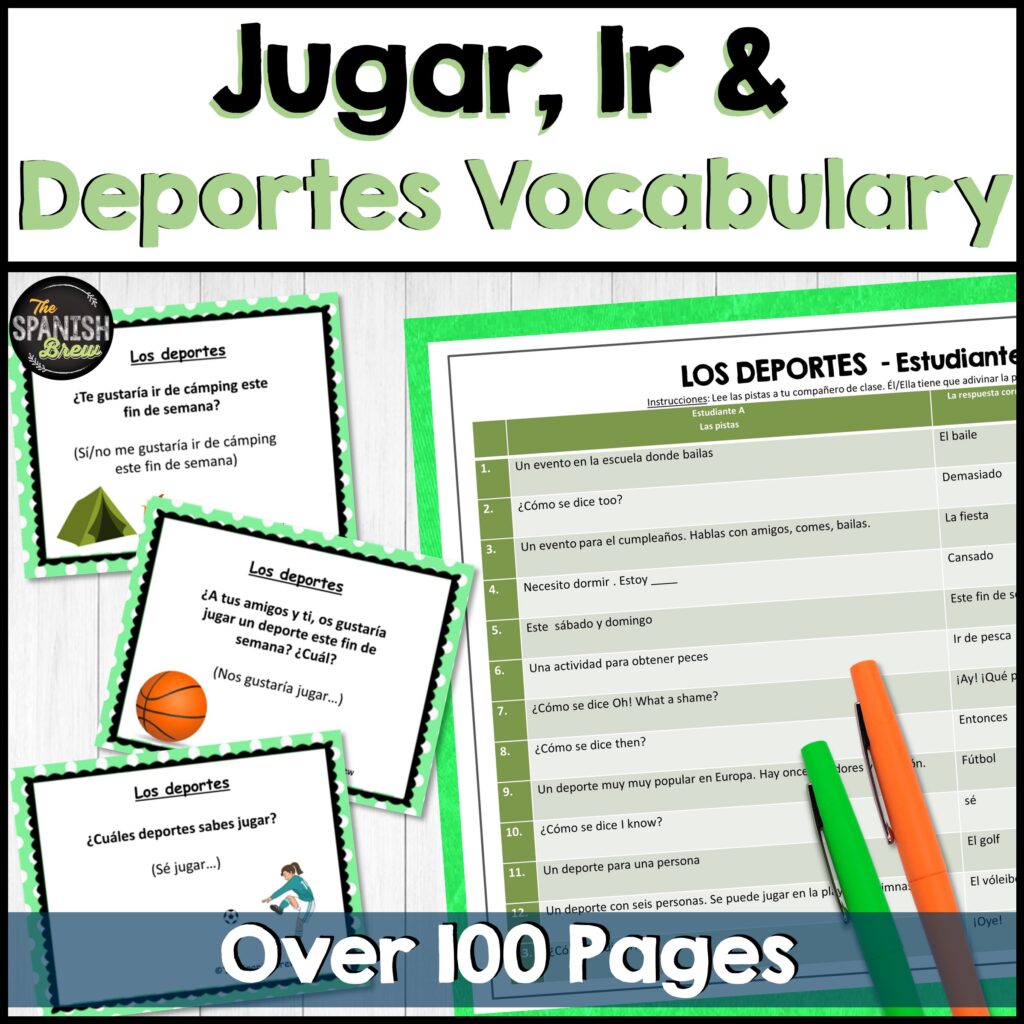
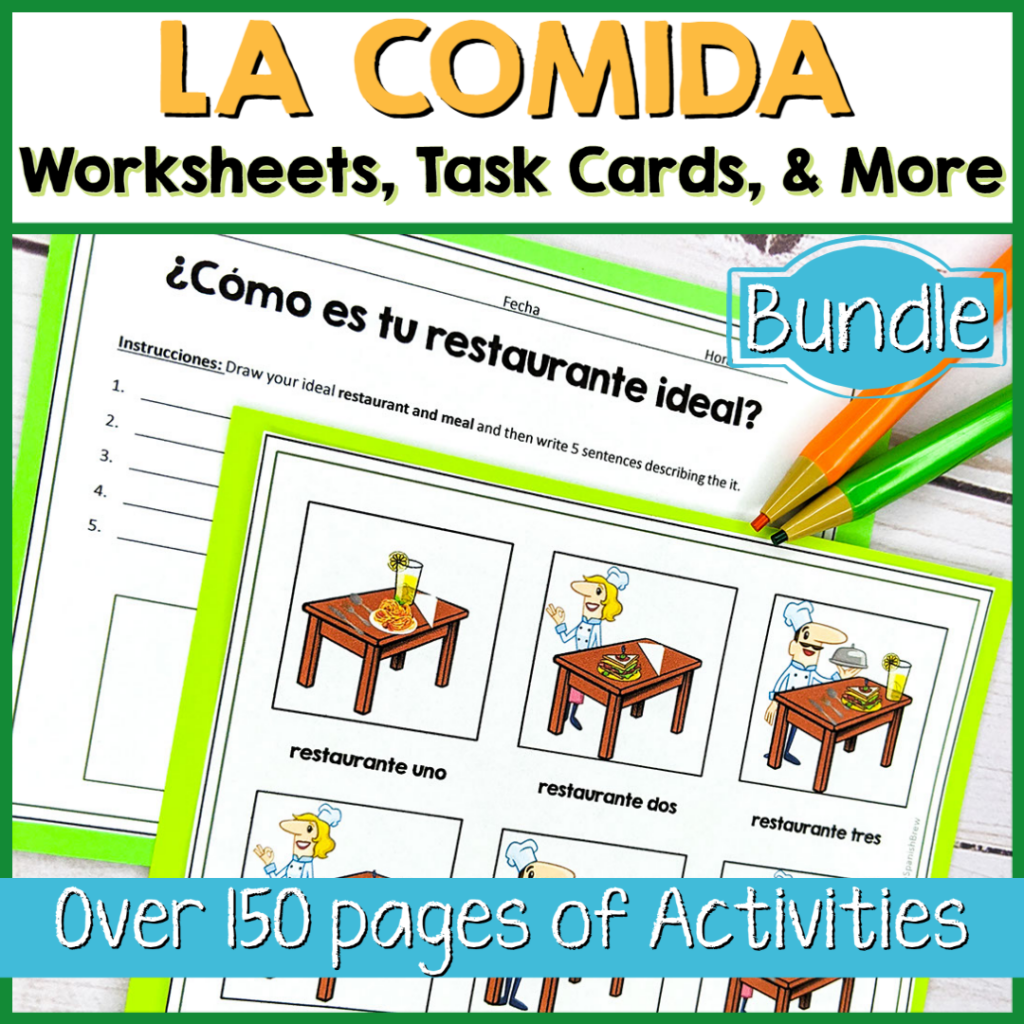
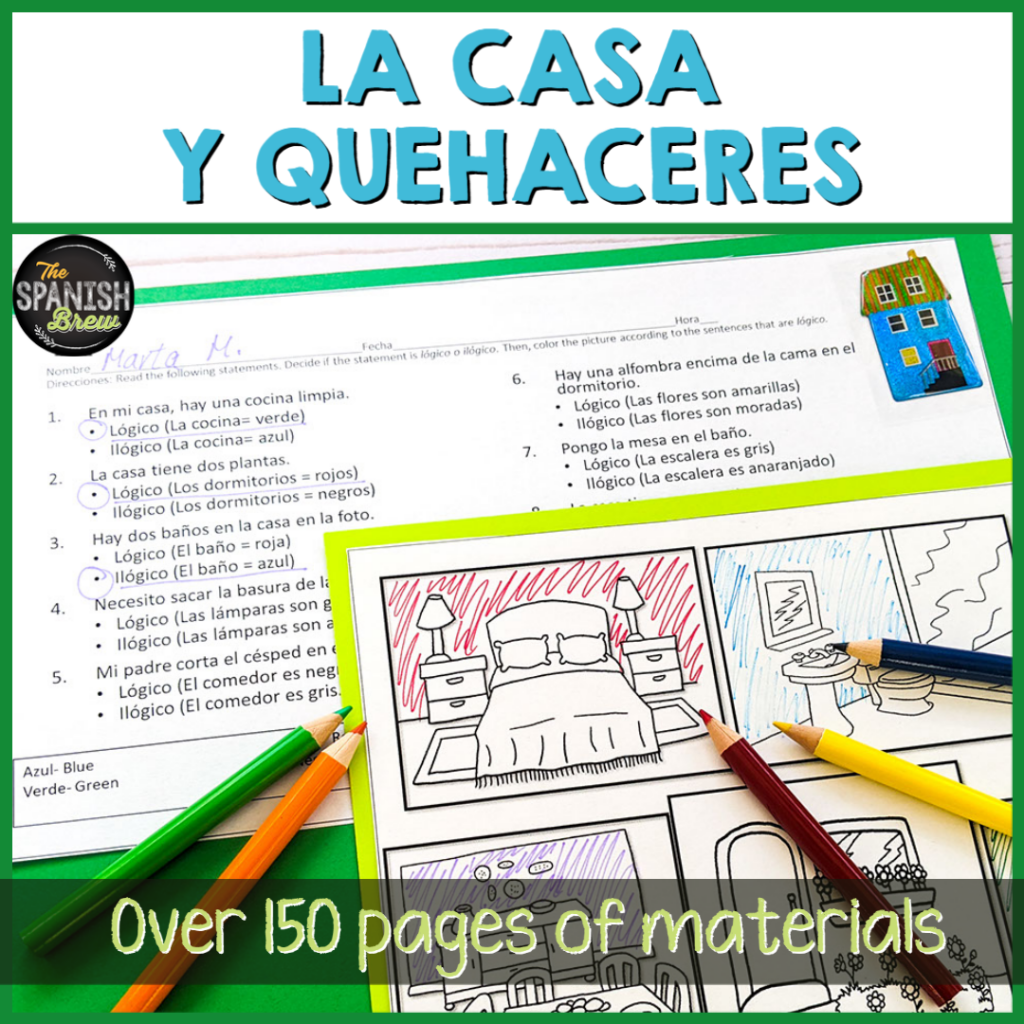
Wrapping Up: Vocabulary Lists with Input, Not Just Lists
Those vocabulary lists in your Spanish book? They’re important. But they’re just the icing, not the whole cake. Using these different ways to introduce new vocabulary words turns that list into something students actually use, talk about, connect with culture, see, draw, memorize, and love.
So next time you open the textbook to a new unit, instead of dread—try excitement. Use one or more of these 12 ideas. Mix, match, adapt. Whatever you pick, make sure your students are getting input, doing something meaningful, and having a little fun. Because that’s teaching that works.
Related Posts:
10 Fun Activities for Teaching Spanish Food Vocabulary
Why do my Spanish Students Need Weather Vocabulary Anyway?
How to Use a Picture Talk Activity to Reinforce Spanish Vocabulary


No Comments